
Kampung Nelayan (Horror) Day and Night: Phases, Clock and Night Planning
The SIANG, SENJA, MALAM and SUBUH phases explained, with the clock cues, night work hours and lit-porch escape rule you need to plan each day of the 7-day assignment.
Quick answer
Day and night are shown directly on the HUD: a phase label — SIANG (day), SENJA (dusk), MALAM (night) or SUBUH (dawn) — next to a clock, and every new day starts with a title card at 06:00. The fishermen are at sea from dawn until afternoon and only come home after dark, so your catch-recording job runs mostly at night. Night is also pitch dark — only the streetlights are powered — and it is when horror encounters happen.
- SIANG: daylight for errands and getting around — the fishermen are still at sea.
- SENJA: dusk; the fishermen come home after dark and the recording work begins.
- MALAM: your main work hours — recording catches, warung errands, house surveys — and the darkest, riskiest hours.
- SUBUH: dawn, around the 5:00 AM prayer, when a new day begins; the day card appears at 06:00.
- If you are chased at night, run to a lit terrace — warung Nek Hijah or any porch with its light on — and the pursuit ends.
Kampung Nelayan (Horror) puts you in a fishing village far from the city for a 7-day catch-recording assignment, and its day-and-night coastal setting decides when every part of that job happens. The cycle is readable at a glance on the HUD, and once you know what each phase means, planning a day is straightforward: daylight for errands, dusk and night for the actual work.
Reading the phases on the HUD
The HUD keeps your time in one place, right beside the current MISI: HARI (the day number), a time-of-day phase label and a clock. The phases use Indonesian names — SIANG (day), SENJA (dusk), MALAM (night) and SUBUH (dawn). In the observed days the clock read 10:00 SIANG on Day 1, 17:00 SENJA the same evening, 21:00 MALAM that night, 07:00 SIANG on Day 2, and 19:30 MALAM on Day 3.
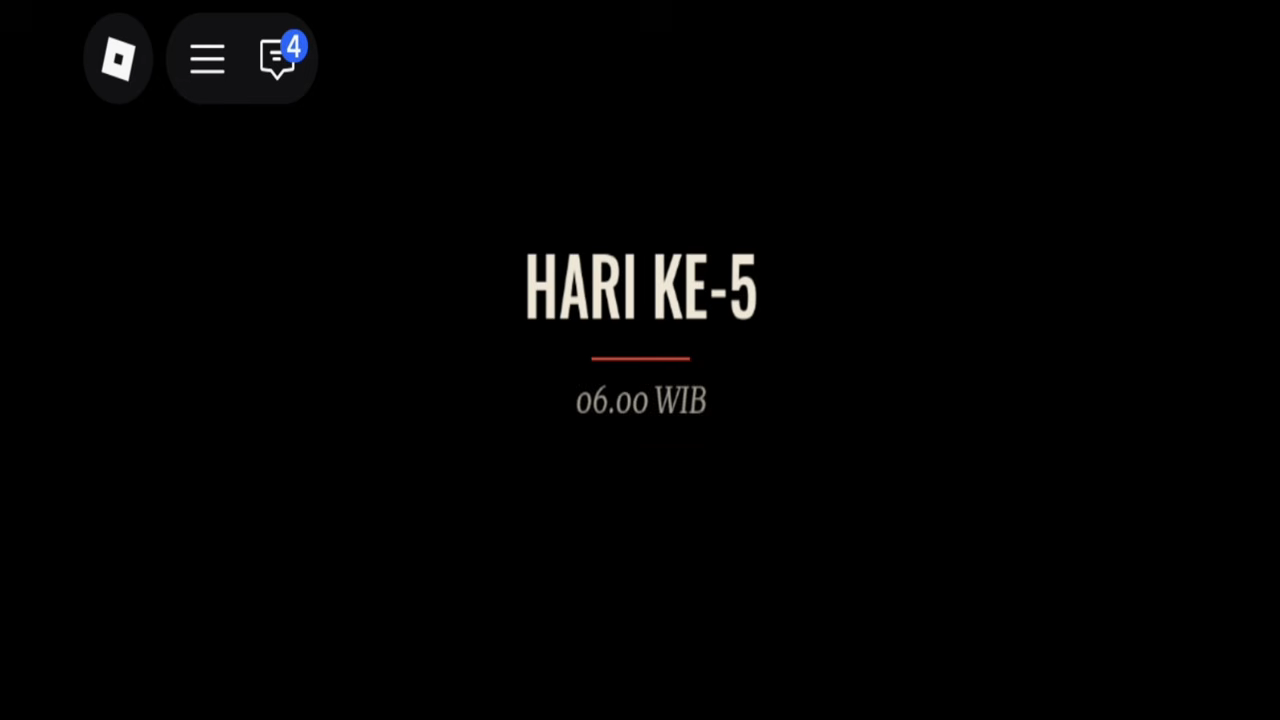
Days roll over at dawn. The dawn prayer is at 5:00 AM, and the new day announces itself with a title card at 06:00 — for example "HARI KE-5 - 06.00 WIB". When that card appears, the next HARI has begun.
Data table
- Phase
- SIANG
- Meaning
- Broad daylight
- Clock examples
- Day 1 10:00, Day 2 07:00
- What you will be doing
- Errands and travel. The fishermen are at sea and nobody is home to record yet.
- Phase
- SENJA
- Meaning
- Dusk
- Clock examples
- Day 1 17:00
- What you will be doing
- The fishermen come home after dark; recording catches starts around dusk.
- Phase
- MALAM
- Meaning
- Night, the darkest phase
- Clock examples
- Day 1 21:00, Day 3 19:30
- What you will be doing
- Night objectives: recording catches, warung errands and house surveys — plus the night encounters.
- Phase
- SUBUH
- Meaning
- Dawn, around the 5:00 AM prayer
- Clock examples
- Day rollover; title card at 06:00
- What you will be doing
- The day flips over to the next HARI.
Treat the clock as your cue: when the phase label changes, change what you are doing.
What daylight (SIANG) is for
The fishermen go to sea from dawn until the afternoon and only get home once it is dark, so midday is exactly the wrong time to look for catches to record — nobody is home yet. Use SIANG for everything else: the day's errand objectives and moving around the village. The observed mornings fell at 07:00 and 10:00 SIANG, just after the 06:00 day card, which makes daylight your quiet window before the work turns dark and tense.
Dusk and night (SENJA and MALAM): the real work hours
Once the light drops, the assignment starts in earnest. The fishermen only return home after dark, so recording their catches happens at dusk and at night. The demonstrated late tasks stack up: on Day 1 the player bought food at warung Nek Hijah at 21:00 MALAM, and on Day 3 the job was knocking on doors to survey four houses along the pond-3 road at 19:30 MALAM. When your clock shows SENJA or MALAM, plan to be working — not exploring.
The recording job itself has its own steps; we cover them in the catch-recording guide.
Night is also extremely dark. The village's electricity only powers the streetlights (lampu jalan), so outside those pools of light you are relying on the flashlight (senter) that Pak Harto gives you when you arrive. He leaves you with one warning that doubles as good tactics: "Kalau udah gelap jangan kelamaan di luar" — once it is dark, do not linger outside too long. Go out, do the task, head back.
Night encounters and the lit-porch escape rule
Night is when horror encounters occur. In the days observed, a pocong showed up at a window right after the player finished evening tasks, and on Day 3 at 19:30 MALAM a Kuntilanak turned a house survey into a chase. When that pursuit starts, the mission switches to "LARI KE WARUNG!" — the game itself tells you where to go. The escape rule is to run to a lit porch: warung Nek Hijah works, and so does any terrace with its light on. Reach a lit terrace and the pursuit ends.
Being caught is not the end of the assignment either — it triggers a dream sequence and you revive without losing mission progress.
Still, the smoothest nights are the ones where you already know where the lights are. Check the map for the warung's location, read up on the figures on the ghosts page, and keep the survival tips in mind after dark.
Planning each day around the cycle
Checklist
- Use SIANG for errands and travel
The fishermen are at sea until after dark, so daylight is for objectives and getting around — not for catch recording.
- Switch to work when SENJA hits
Recording catches starts at dusk and at night, once the fishermen are home.
- Expect late-evening objectives
Demonstrated night tasks include the 19:30 house survey and the 21:00 warung food run.
- Keep trips short after dark
Only the streetlights are powered, and Pak Harto warns not to linger outside once it is dark — take the senter and go.
- Know a lit porch near your route
If a chase starts ('LARI KE WARUNG!'), run to warung Nek Hijah or any terrace with its light on to end the pursuit.
- Watch the HUD clock and MISI
The phase label, clock and current MISI tell you which day it is and what the village expects from you next.
Seven days, one way home
The official experience description advertises exactly this rhythm — "day and night coastal vibes" in a location far from the city — and pairs it with a warning: you are assigned for 7 days, and you go home safe or not at all, so do not act recklessly during the task. The danger observed so far lives after dark, so the practical reading is to plan your nights deliberately: know the tasks, know the lit porches, and do not wander.
For the full route through all seven days, follow the complete walkthrough.